

THE SHI(F)T
THAT MATTERS
vs. The Shi(f)t You (Actually) Control
A Stoic 21-Day Field Manual for Men Who Still Have Fight Left
The (F) is optional. As in, un(f)ck yourself.
"Make the best use of what is in your power, and take the rest as it happens."
Table of Contents
I Built This For Me. You're Welcome To Join.
I'm going to be honest with you. I didn't write this book because I've got it all figured out. I wrote it because I don't.
I wrote it because some mornings I wake up and the fire that used to burn in my chest feels and smells like wet dog. Because I still catch myself thinking "when I grow up, I want to be..." and then I remember I'm in my mid-fifties. If I haven't grown up yet, I probably never will. And honestly? That might be okay.
But here's what's not okay: losing the curiosity. Losing the zest. Losing the ability to forge new frontiers just because we've already forged a few and have the burnt fingers to prove it.
Not burnt ends. Those are delicious. Burnt fingers. From touching stoves we were told not to touch. From deals that went sideways. From relationships that exploded. From bets we made on ourselves that didn't pay off the way the brochure promised.
We've got experience. Mountains of it. But somewhere along the way, did we trade our fire for a filing cabinet?
How We Lost Our Way
Marlene Dietrich said it best: "Most women set out to try to change a man, and when they have changed him they do not like him."
We started out as the guy she couldn't wait to see. The one with the edge. The ambition. The fire. The rough edges that made us interesting. Then, slowly, the edges got sanded down. The ambition got "managed." The fire got scheduled into appropriate time slots between errands and obligations.
We didn't notice it happening. We were too busy providing. Too busy being responsible. Too busy becoming the optimized, domesticated version of ourselves that fit better into the family calendar.
And now? Now we're the guy whose socks get picked out for him. The walking ATM with opinions nobody asked for. Partner to project. Leader to... managed. We used to be dangerous. Now we're dependable. And somewhere in between, we lost ourselves.
The Two Circles
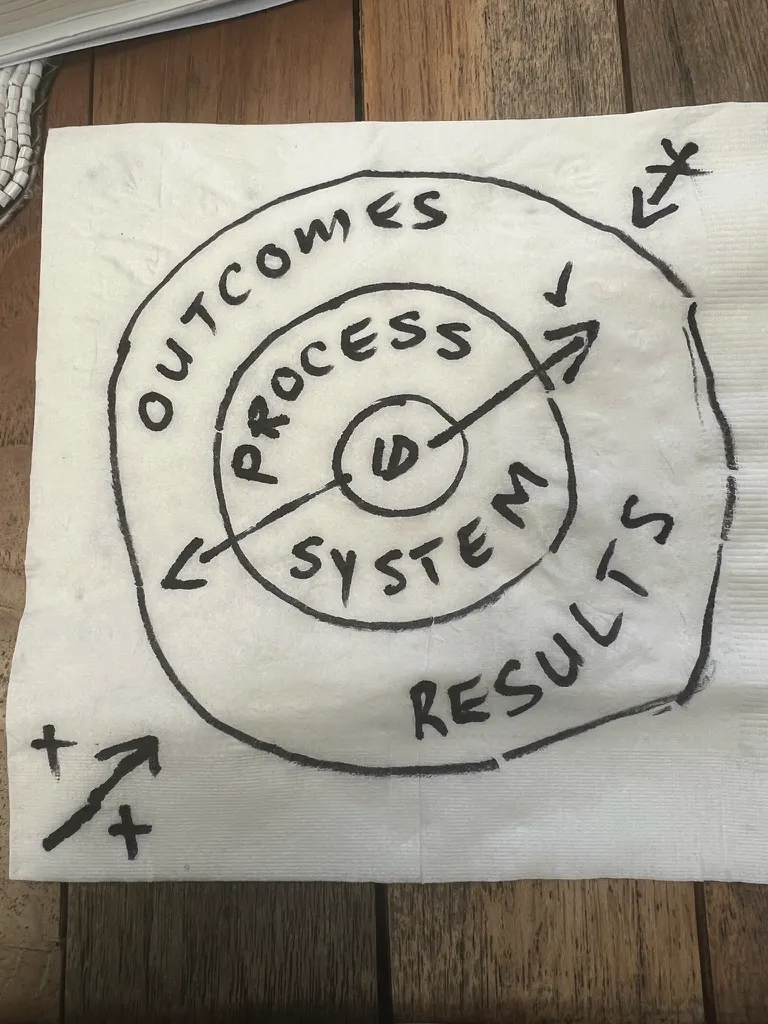
Here's the framework that holds everything together. Two thousand years ago, a former slave named Epictetus taught Roman senators something so simple it's almost insulting. He called it the dichotomy of control: Some things are within our power. Some things are not. Wisdom is knowing the difference.
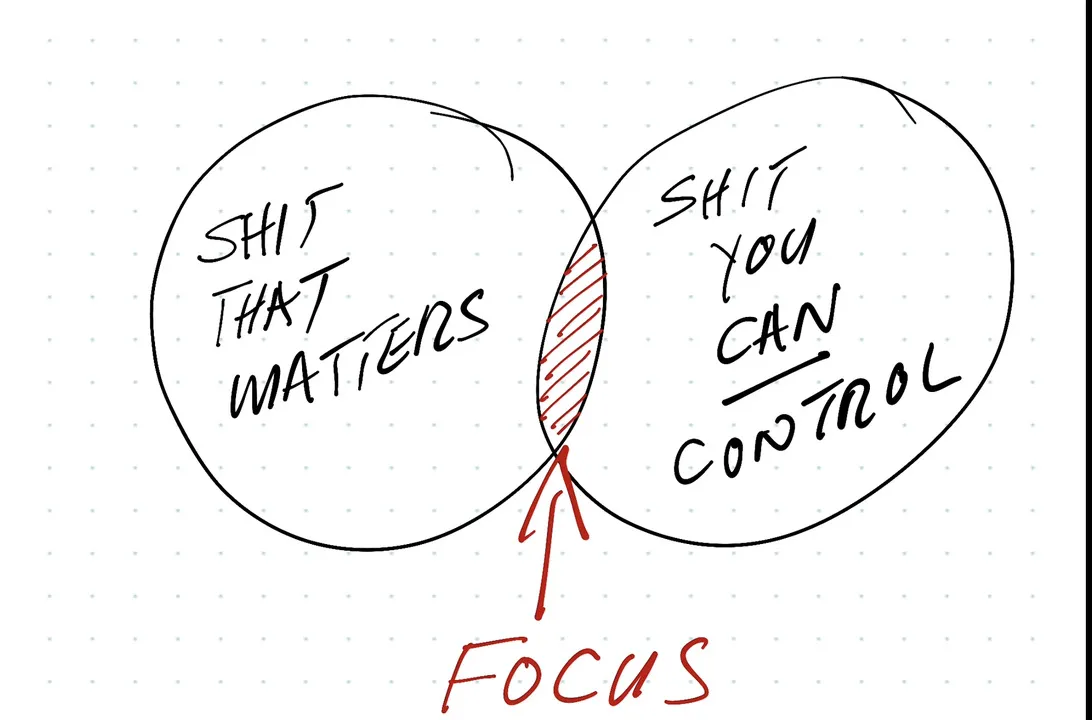
First circle: Shi(f)t That Matters. The things that actually mean something. Your health. Your family. Your legacy. Your character. The stuff that will matter on your deathbed.
Second circle: Shi(f)t You Can Control. Your thoughts. Your responses. Your effort. Your attitude. What you choose to focus on. The meaning you assign to whatever nonsense lands in your lap on any given Tuesday.
Most of us exhaust ourselves in one of two ways: Either we're obsessing over things that matter but we can't control (the economy, other people's opinions, our kids' choices, our own mortality)... Or we're controlling things that don't actually matter (our inbox, our schedule, arguments on the internet, what the neighbor thinks). Both are traps.
The magic happens where the circles overlap. That intersection. That sliver where what actually matters meets what we can actually do something about. That's where the fight belongs. That's where peace lives.
The Atlas
On September 13, 1976, my father Arnfried died in a plane accident. He was on his way to his next adventure, as he always was. I was young. Too young to understand what I had lost.
A few weeks later, a package arrived. Inside was a World Atlas, meant to be my father's birthday gift. With it came a handwritten note from a man named Clifford Harris:
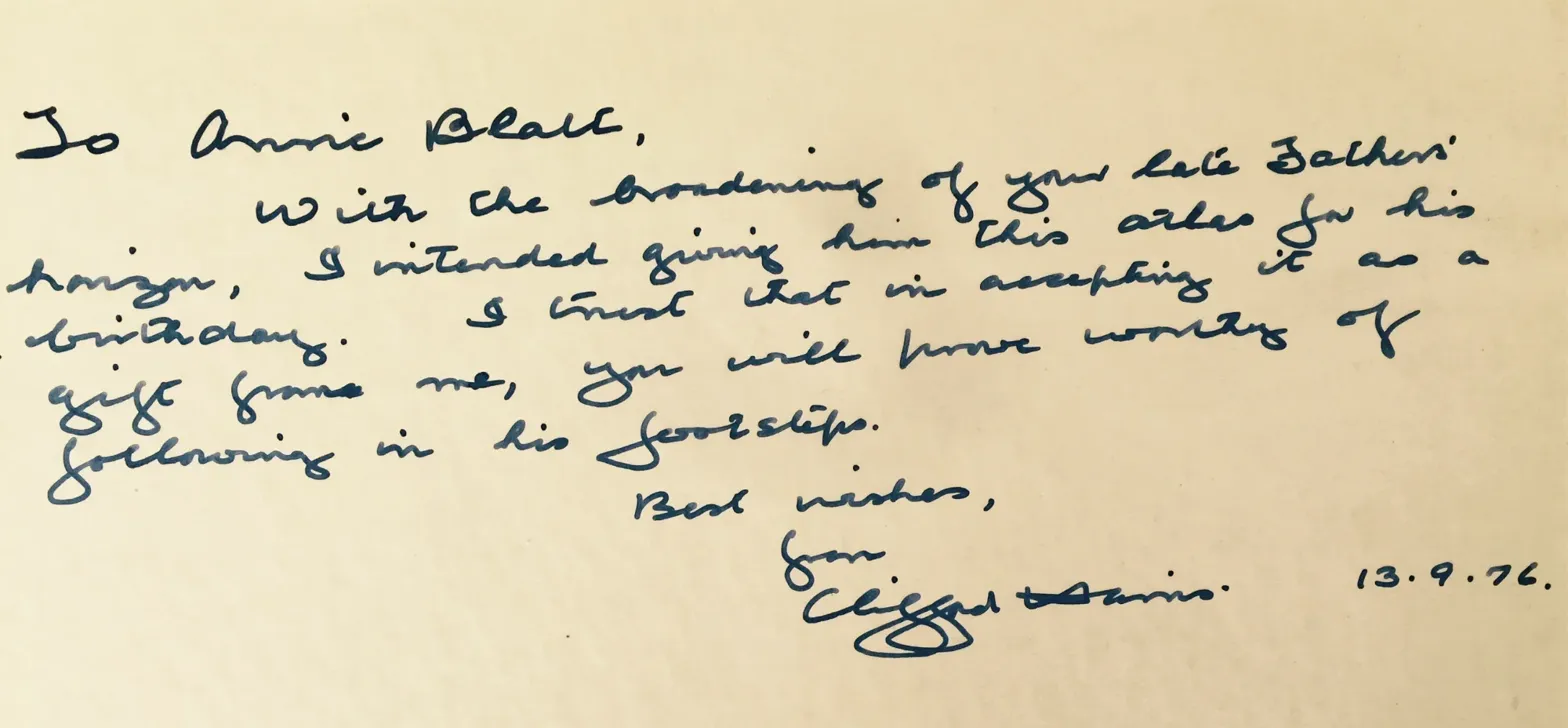
Two words changed my life: "Prove worthy."
Not achieve more. Not accumulate more. Not impress more. Prove worthy. Worthy of what? Worthy of the life we want to attract. Worthy of the relationships we desire. Worthy of the legacy we wish to leave.
This book is about becoming worthy. Not about having more. About being more. About proving, to ourselves first, that we deserve the life we dream about.
The Deal
I'm not your guru. I'm not your coach. I'm not standing on a mountain with abs and a headset waiting for you to climb up and pay me. I'm doing this with you. I need these 21 days as much as you do. Maybe more.
So here's the deal: We show up. Every morning. Before the phone. Before the email. Before the wife needs something. Before the world tells us what to think and how to feel. Just us, the page, and whatever question we've been dodging.
We don't have to be perfect. We just have to be honest. We don't have to have answers. We just have to stop running from the questions. And if we miss a day? We pick it back up the next day. No guilt. No shame. No "I fell off the wagon" drama. We're too old for that nonsense.
Napoleon Hill concluded: "There is one quality which one must possess to win, and that is definiteness of purpose, the knowledge of what one wants, and a burning desire to possess it."
We picked up this book. Something in us still wants to win. Something in us still believes there's another chapter. Something in us refuses to believe the best stories are behind us. Good. Let's find out if we mean it.
Day 1 starts tomorrow morning. Same time. Same place. Bourbon optional. Stogie optional. Dog at your feet, highly recommended.
You and me. 21 days. If you've got the balls to see it through.
Let's go.
↑ Back to Table of ContentsThe Two Circles
"Make the best use of what is in your power, and take the rest as it happens."
"God, grant me the serenity to accept the things I cannot change, the courage to change the things I can, and the wisdom to know the difference."
"A man is literally what he thinks, his character being the complete sum of all his thoughts."
The Problem
We're exhausted. Not from working too hard. From fighting the wrong battles. We spend our energy arguing with reality. Wishing our boss was different. Wishing the economy would cooperate. Wishing our kids would listen. Wishing our bodies would stop reminding us of our age. We exhaust ourselves pushing against walls that will never move. And then we wonder why we have nothing left for the things that actually matter.
Color and Context
In 1965, Commander James Stockdale's plane was shot down over Vietnam. As he parachuted into enemy territory, knowing he was about to be captured and tortured, he whispered to himself: "I'm leaving the world of technology and entering the world of Epictetus."
For the next seven and a half years, Stockdale was beaten, starved, and tortured. His shoulders were ripped from their sockets. He spent four years in solitary confinement. He survived by drawing two mental circles every single day.
Circle one: What the guards could do to his body. Outside his control. Circle two: How he chose to respond. Completely his. The guards controlled his circumstances. Stockdale controlled his character. That distinction saved his life. And his sanity. Meanwhile, most of us lose our minds because someone cut us off in traffic.
The Reframe
The two circles aren't just philosophy. They're triage. Think about an emergency room. When patients flood in, doctors don't treat everyone equally. They triage. They sort. They put their energy where it can actually make a difference. That's what the circles do for your life.
Every situation, every problem, every frustration gets sorted: Can I do something about this? Circle two. Get to work. Is this outside my control? Circle one. Let it go. Not "pretend it doesn't exist." Not "stuff your feelings." Just... stop pouring energy into a hole with no bottom. You don't have unlimited energy anymore. None of us do. The circles help us stop wasting what we have left.
The Teaching
Today, we're not solving anything. We're just learning to see. Every time something bothers you today, just notice: Which circle? That's it. No action required. Just awareness.
The driver who won't use his turn signal. Which circle? Your colleague who still hasn't responded to that email. Which circle? The news that's designed to make you angry. Which circle? Your lower back that's been hurting for three weeks. Which circle? (Tricky one. The pain is circle one. Making the appointment is circle two.)
Start seeing your life through this lens. It changes everything.
What battle have I been fighting that was never mine to win?
Everything Can Be Taken Except One Thing
"Everything can be taken from a man but one thing: the last of the human freedoms — to choose one's attitude in any given set of circumstances, to choose one's own way."
"It is not things that disturb us, but our judgments about things."
"The LORD gave, and the LORD has taken away; blessed be the name of the LORD."
The Problem
We think freedom means having options. More money. More choices. More control over our circumstances. So we spend our lives accumulating. Building buffers. Creating safety nets. Trying to arrange the world so nothing bad can touch us. And then something bad touches us anyway. The diagnosis. The betrayal. The market crash. The phone call at 2am. And we realize all that accumulation didn't make us free. It just gave us more to lose.
Color and Context
Viktor Frankl was a successful psychiatrist in Vienna when the Nazis came. They took his practice. They took his home. They took his pregnant wife. They took his parents. They took his manuscript, the book he'd been writing for years. They shaved his head, tattooed a number on his arm, and put him in a striped uniform. They took everything. Almost.
In the concentration camps, Frankl noticed something. Some prisoners gave up immediately. Others, who seemed weaker, lasted years. The difference wasn't physical strength. It wasn't luck. It was meaning. The ones who survived had something to live for. A person waiting for them. A task left unfinished. A reason to see tomorrow.
Frankl's reason? To rewrite his book. To share what he was learning about human psychology in the most extreme laboratory imaginable. The Nazis could take his manuscript. They couldn't take his ideas. They couldn't take his choice to observe, to learn, to find meaning in suffering. That choice was his. That choice is yours.
The Reframe
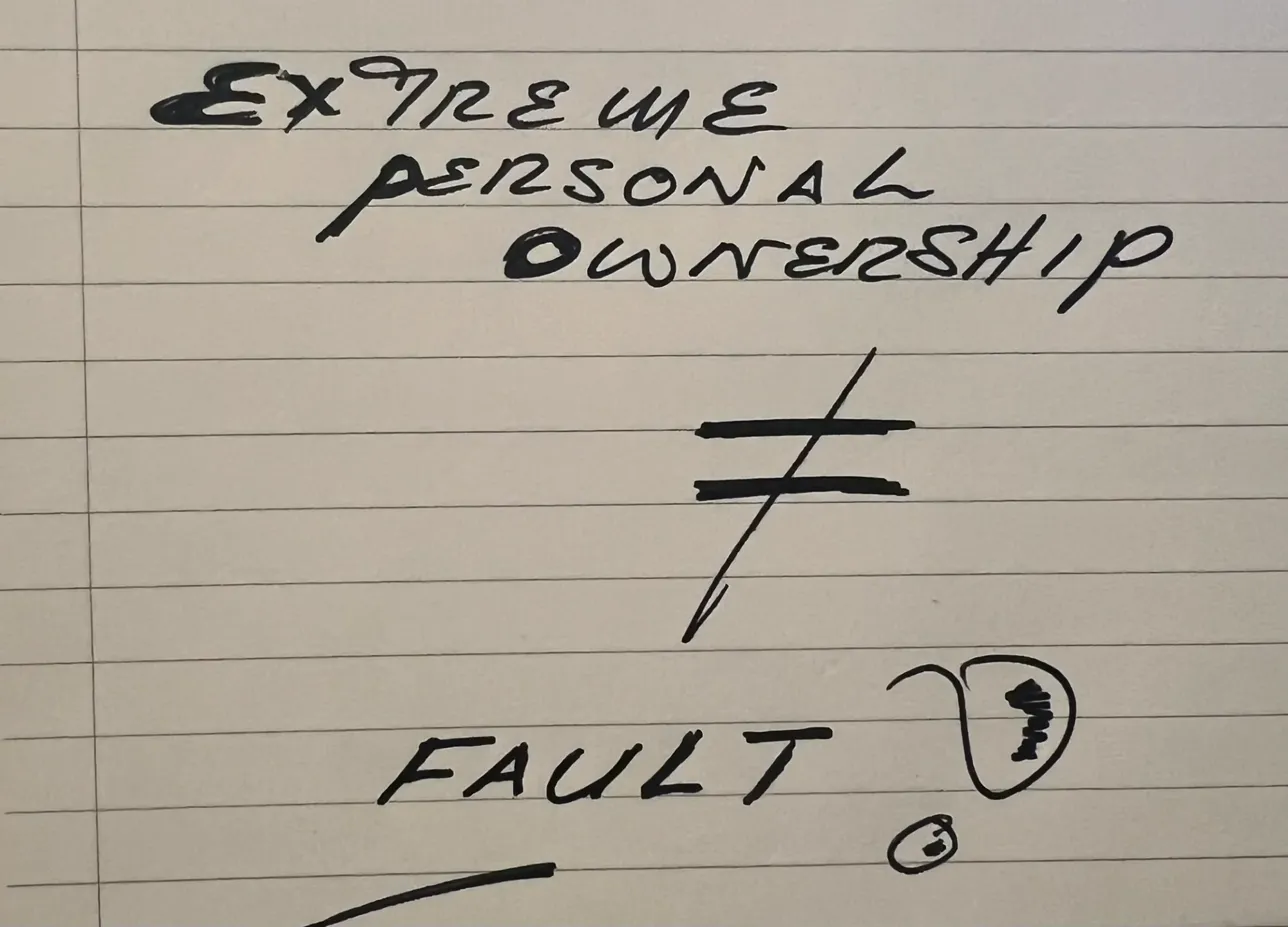
Freedom isn't the absence of constraints. Freedom is the presence of choice within constraints. Stockdale was in chains. But he chose defiance. Frankl was in a death camp. But he chose meaning. Paul wrote his greatest letters from prison. The external circumstances were fixed. The internal response was not.
This reframe matters because we spend so much energy trying to change our circumstances when the faster path is often changing ourselves. Not resignation. Not "giving up." Just recognizing that the most powerful freedom we have is the one nobody can take. How we respond. What we make it mean. Who we decide to be. That's ours. Always.
The Teaching
Today, notice where you feel trapped. The job you can't leave. The relationship that's complicated. The body that doesn't work like it used to. The situation that has no good options.
Now ask: What choice do I still have here? Maybe you can't change the circumstance. But can you change your posture toward it? Your story about it? Your response to it? The prison isn't always the problem. Sometimes the problem is that we forgot we're not actually in prison.
Where in my life have I been acting like I have no choice when I actually do?
Memento Mori
"You could leave life right now. Let that determine what you do and say and think."
"Let us prepare our minds as if we'd come to the very end of life. Let us postpone nothing."
"Teach us to number our days, that we may gain a heart of wisdom."
The Problem
We live like we have forever. We postpone the important conversations. We delay the meaningful work. We assume there will be time later to become the man we know we should be. "Someday I'll..." "When things settle down, I'll..." "Next year, I'll..." Meanwhile, the clock keeps ticking. And "someday" keeps not arriving. We're not lazy. We're not stupid. We're just... deceived. By the illusion that tomorrow is guaranteed. It's not.
Color and Context
The Stoics kept skulls on their desks. Not because they were morbid. Because they understood something we've forgotten: death is the ultimate deadline. And deadlines create clarity.
Marcus Aurelius ruled the most powerful empire on earth. He could have had anything. Done anything. Postponed anything. Instead, every morning before dawn, he wrote reminders to himself about death. Not to be depressed. To be awake. "You could leave life right now." Not "someday." Now. That awareness didn't make him frantic. It made him focused. It made him kind. It made him serious about what actually mattered. Meanwhile, we get stressed about emails. Memento mori. Remember that you will die. Not to be dark. To be alive.
The Reframe
Death isn't the enemy. Forgetting about death is the enemy. When we forget we're mortal, we live like everything matters equally. We treat urgent and important as the same thing. We spend hours on nonsense and minutes on meaning.
When we remember we're mortal, everything clarifies. That argument with your wife? Life's too short. Apologize. That project you've been "meaning to start"? Life's too short. Start today. That person you've been "meaning to call"? Life's too short. Call now. That grudge you've been carrying? Life's too short. Put it down. Death is a filter. Run your life through it. Watch what survives.
The Teaching
This isn't about being morbid. It's about being honest. You're going to die. So am I. So is everyone we love. The question isn't whether. It's when. And since we don't know when, the only sane response is to live like it matters.
Today, do one thing you've been postponing. Make the call. Send the letter. Start the project. Have the conversation. Not because you have to. Because you might not get another chance. And wouldn't it be tragic to leave things unsaid, undone, unlived?
If I knew I only had one year left, what would I stop tolerating immediately?
Amor Fati
"Do not seek for things to happen the way you want them to; rather, wish that what happens happen the way it happens: then you will be happy."
"Every adversity, every failure, every heartbreak, carries with it the seed of an equal or greater benefit."
"And we know that for those who love God all things work together for good."
The Problem
We fight our own history. We replay the failures. We catalog the injustices. We rehearse what should have happened instead of what did. "If only I had..." "Why did they..." "It's not fair that..." We become prosecutors, building cases against our own past. And every time we win the argument in our head, we lose a little more energy. A little more peace. A little more present. The past isn't the problem. Our war with the past is the problem.
Color and Context
The philosopher Nietzsche had a concept: Amor Fati. Love of fate. Not acceptance. Not tolerance. Love. Love the hand you were dealt. Love the setbacks that shaped you. Love the failures that taught you. Love the pain that forged you.
Because here's the truth: You can't have the wisdom without the wounds. Every successful man I know has a story of near-disaster that became their defining advantage. The business that failed taught them what the MBA never could. The betrayal revealed who they actually were. The bankruptcy became their best case study. The fire that was supposed to destroy them forged them instead.
Amor Fati doesn't mean pretending bad things are good. It means trusting that you can extract good from bad things. That's not optimism. That's alchemy.
The Reframe
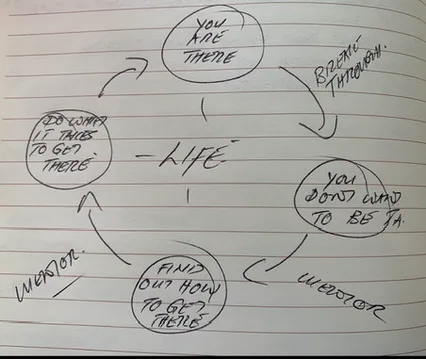
Your past isn't a prison. It's raw material. Every scar is a credential. Every failure is tuition. Every setback is setup for what comes next. But only if you stop fighting it. As long as you resent your history, you're dragging it behind you. The moment you accept it, you can build on it.
This isn't about letting people off the hook. It's about letting yourself off the hook. They did what they did. It happened. The only question now is: What will you make of it? Victims ask, "Why did this happen to me?" Alchemists ask, "What can this become?"
The Teaching
Today, pick one thing from your past that still stings. A failure. A betrayal. A missed opportunity. A wound that hasn't fully healed.
Now ask: What did that experience make possible? What strength did it build? What wisdom did it teach? What path did it open that wouldn't have opened otherwise?
You don't have to be grateful for the pain. Just look for what the pain produced. That's the beginning of amor fati.
What past "failure" has actually become one of my greatest advantages?
The Inner Citadel
"Nowhere can man find a quieter or more untroubled retreat than in his own soul."
"No man is free who is not master of himself."
"For God gave us a spirit not of fear but of power and love and self-control."
The Problem
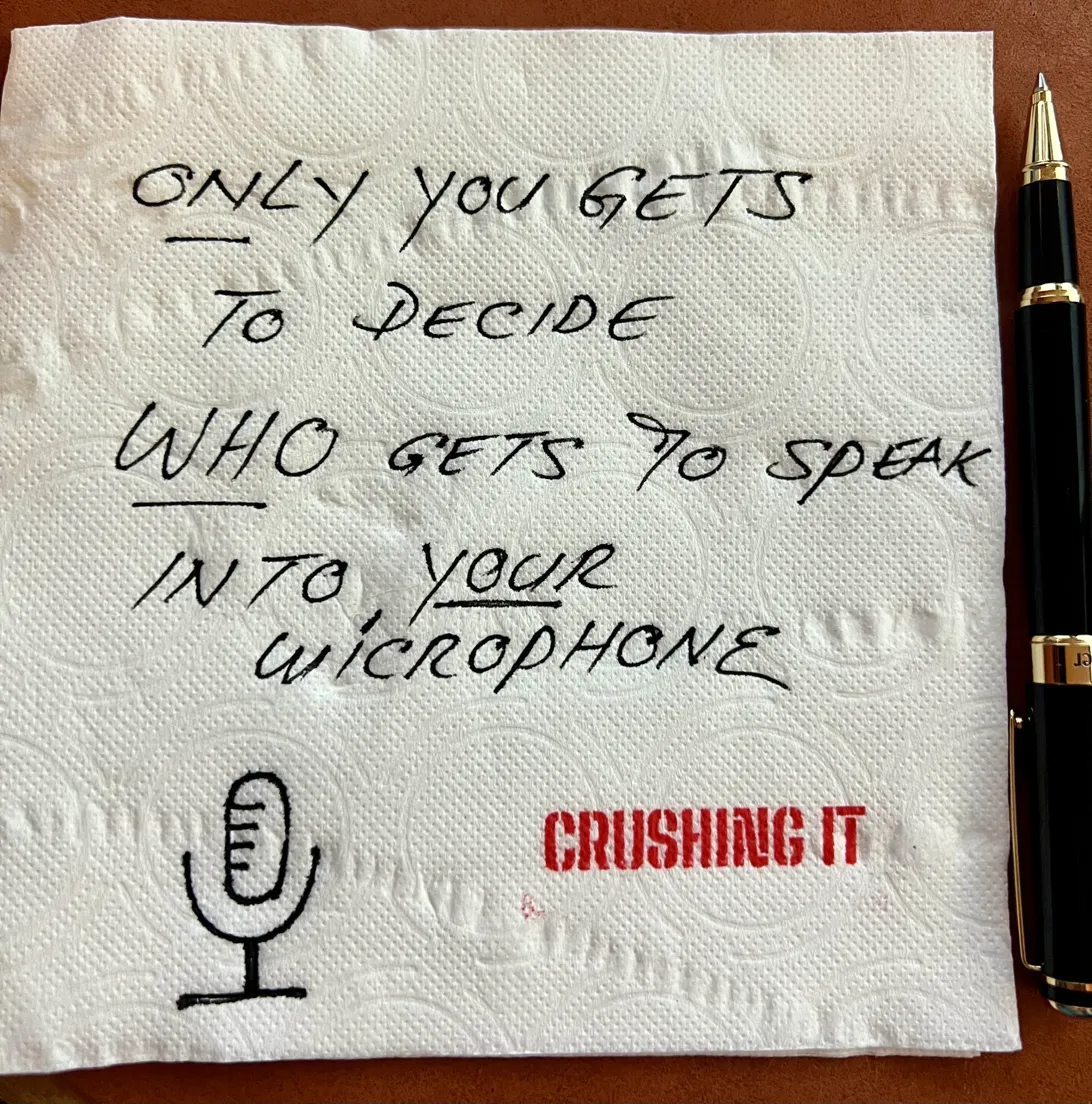
We let everything in. Every headline. Every opinion. Every criticism. Every notification. Our minds have become Times Square on New Year's Eve. Crowded. Loud. Chaotic. Overstimulated. No wonder we can't think. No wonder we can't decide. No wonder we feel anxious for no reason. We've left the gates wide open, and now we're wondering why we don't feel safe in our own heads.
Color and Context
Marcus Aurelius called it the "inner citadel." A fortress inside yourself that no external force can penetrate. A place of calm that exists regardless of what's happening outside. Not escapism. Not denial. Just... sovereignty.
The emperor of Rome could have let anything into his head. He had advisors shouting. Generals demanding. Senators scheming. Enemies plotting. Instead, he built walls. Not physical walls. Mental walls. He decided what got access to his attention. He decided what voices mattered. He decided what thoughts were welcome.
We can do the same. We don't need a meditation retreat. We need to stop leaving our mental gates wide open for anyone with a smartphone to walk through.
The Reframe
You are not obligated to have an opinion about everything. You are not obligated to respond to every provocation. You are not obligated to let every piece of information into your consciousness just because it exists.
The inner citadel isn't about being cold or detached. It's about being selective. What do you let in? What do you keep out? Where do you direct your attention? These are choices. And they're the most important choices we make every day. Because what we let in shapes what we become.
The Teaching
Today, notice what you're letting in. The news you consume. The conversations you engage. The content you scroll. The arguments you enter.
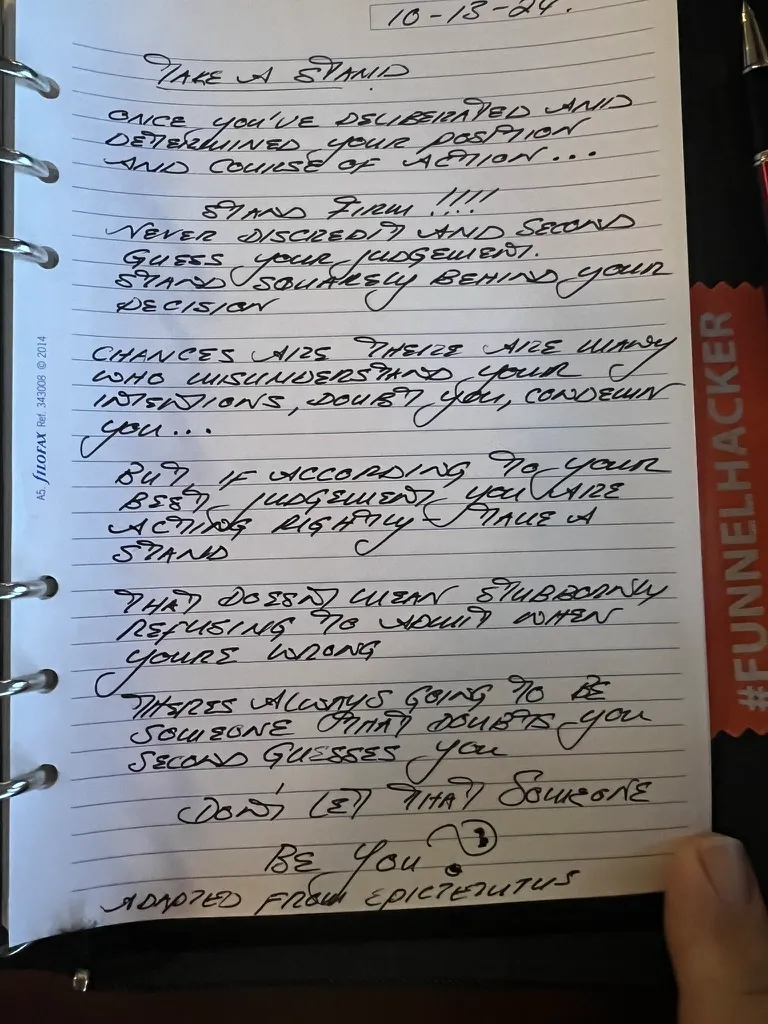
Ask: Is this making me stronger or weaker? Clearer or more confused? More at peace or more agitated? You're the gatekeeper. Start acting like it.
What am I letting into my mind that's weakening rather than strengthening me?
The Unlived Life
"Most of us have two lives. The life we live, and the unlived life within us. Between the two stands Resistance."
"It is not that we have a short time to live, but that we waste a lot of it."
"Whatever your hand finds to do, do it with all your might."
The Problem
There's a version of you that you've never met. The one who wrote the book. Started the business. Had the conversation. Made the leap. Became the man he always knew he could be. That version exists. You can feel him. In quiet moments. In the shower. At 3am when you can't sleep. He's not fantasy. He's possibility. And something is standing between you and him.
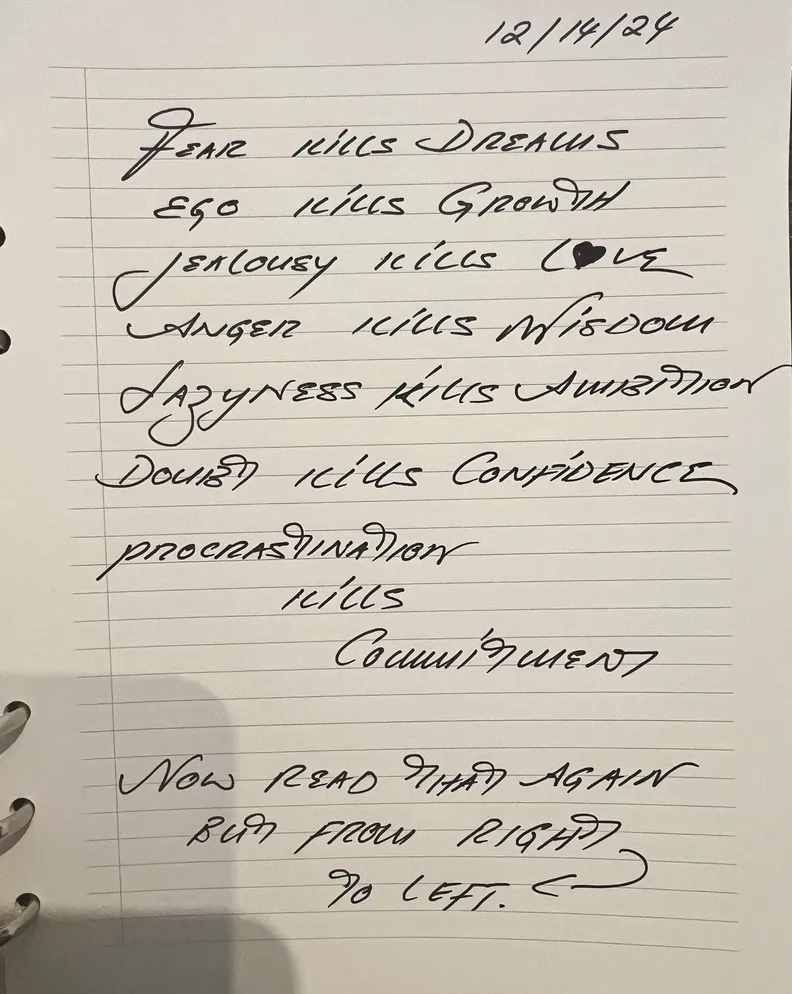
Pressfield calls it Resistance. The Stoics called it passion. The Bible calls it the flesh. Whatever you call it, it's the force that keeps us stuck. The voice that says "not today." The gravitational pull toward comfort, distraction, and the status quo.
Color and Context
Seneca did the math. He pointed out that we're generous with our money but reckless with our time. We guard our property fiercely but let anyone steal our hours. We say yes to every obligation. We scroll through content that adds nothing. We attend meetings that accomplish nothing. We have conversations that go nowhere. And then we're shocked that life feels short.
Life isn't short. We make it short. Through a thousand tiny surrenders to Resistance. The unlived life doesn't disappear in one dramatic moment. It dies by a thousand cuts. A thousand "not todays." A thousand "maybes later." Until later runs out.
The Reframe
Resistance isn't the enemy. It's the compass. Pressfield noticed something: The more important the work, the stronger the Resistance. The bigger the dream, the louder the voice telling you to sit back down.
So instead of running from Resistance, use it. Feeling massive resistance about writing that book? That's how you know it matters. Terrified about having that conversation? That's how you know it's necessary. Every time Resistance shows up, it's pointing at something important. The thing you most need to do is usually the thing you least want to do. That's the tell.
The Teaching
Today, identify one thing Resistance has been keeping you from. You know what it is. You've known for a while.
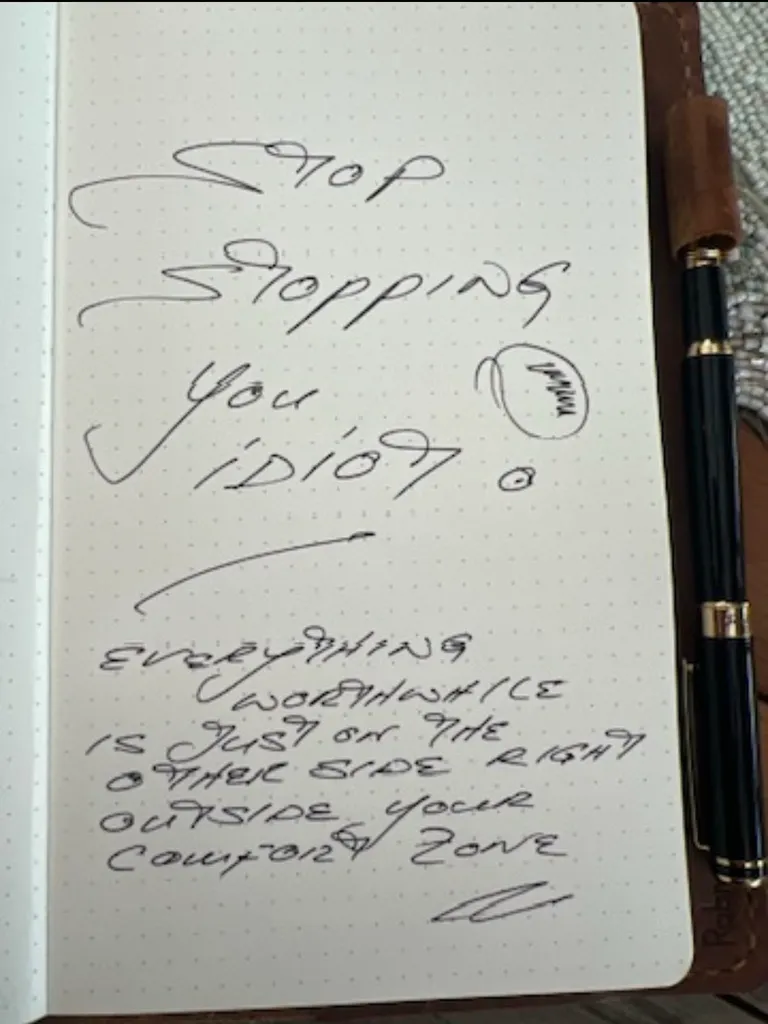
Don't commit to finishing it. Just commit to starting. Five minutes. One paragraph. One phone call. One step. Resistance loses power the moment we move. Not think. Not plan. Move.
What have I been putting off that I know I need to do?
Your Acres of Diamonds
"Your diamonds are not in far distant mountains or in yonder seas; they are in your own backyard, if you but dig for them."
"Your big opportunity may be right where you are now."
"The kingdom of heaven is like treasure hidden in a field."
The Problem
We think the answer is somewhere else. A different job. A different city. A different relationship. A different industry. We're convinced that if we could just get to that other place, things would finally work. The grass looks so much greener over there. So we search. We dream about escape. We fantasize about reinvention. Meanwhile, we neglect the opportunities right under our feet.
Color and Context
Russell Conwell told a story so powerful he delivered it over 6,000 times. A Persian farmer heard about men discovering diamond mines and becoming wealthy beyond imagination. Excited, he sold his farm and spent years searching for diamonds. Eventually, broke and broken, he drowned himself in despair.
Meanwhile, the man who bought his farm was watering his camel one day and noticed a strange rock in the stream. That rock was a diamond. The farm the original owner sold turned out to contain one of the most productive diamond mines in history. Acres of diamonds. Right there. The whole time.
We laugh at the farmer. But we're the farmer. We're searching for opportunities in some imagined future while ignoring the ones in our present. We're networking with strangers while neglecting existing relationships. We're chasing new skills while our current ones rust. The diamonds are here. We just haven't bothered to dig.
The Reframe
What if everything you need is already within reach? What if the opportunity isn't "out there" but right here? What relationships could you deepen instead of chasing new ones? What skills could you develop instead of abandoning? What resources do you already have that you're not using?
Conwell's point wasn't that you should never change. It's that you should fully explore where you are before assuming the answer is somewhere else. Most people never dig. They just keep moving, hoping the next place will require less work. It won't.
The Teaching
Today, stop searching and start seeing. Look at your current situation. Your current relationships. Your current skills. Your current resources.
Where are the diamonds you've been ignoring? What opportunity has been sitting there, waiting for you to notice? Sometimes the most valuable thing we can do is stop looking elsewhere and start digging where we stand.
What opportunity in my current situation have I been overlooking?
Do Not Scatter Your Powers
"To be everywhere is to be nowhere."
"Whatever you do, do it with all your might. Work at it, early and late, in season and out of season."
"A double-minded man is unstable in all his ways."
The Problem
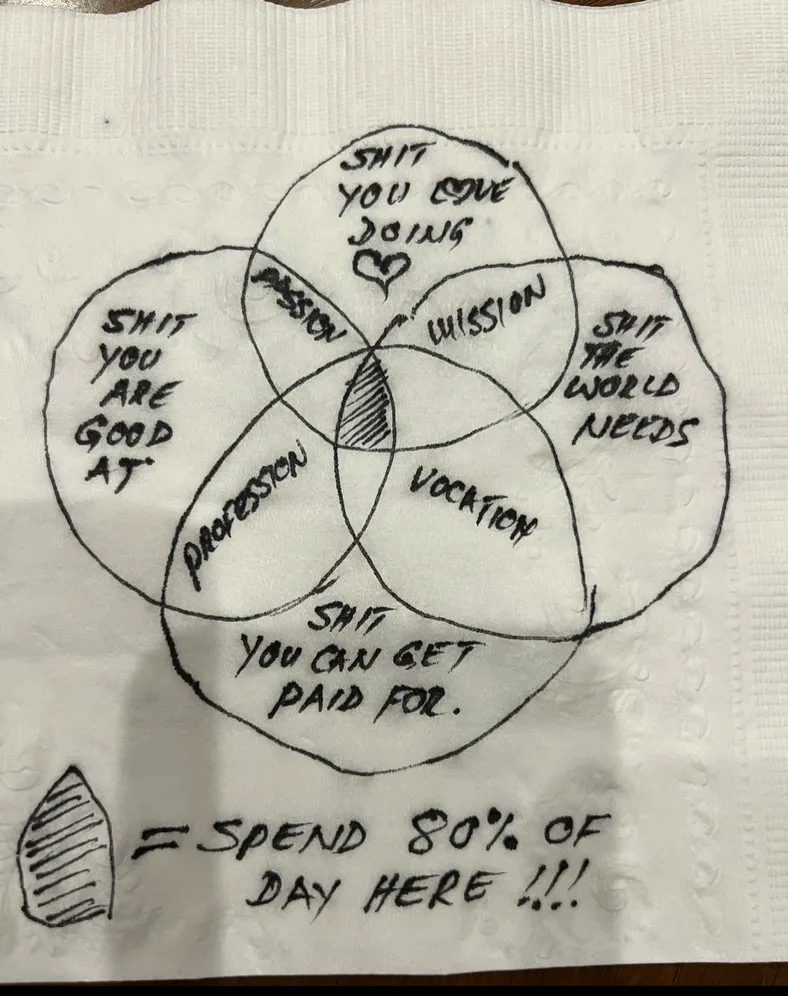
We're spread too thin. Too many projects. Too many obligations. Too many "opportunities" that are really just distractions wearing business casual. We've said yes so many times we've forgotten what no sounds like. And now we're doing twenty things poorly instead of three things well.
Seneca saw this 2,000 years ago: "To be everywhere is to be nowhere." The scattered man accomplishes nothing. The focused man moves mountains.
Color and Context
Marcus Aurelius ran an empire while fighting wars on multiple fronts. He could have justified any amount of distraction. Instead, he wrote constantly about focus. About doing one thing at a time. About not letting the urgent crowd out the important.
Barnum built one of the most successful entertainment empires in history. His advice? "Whatever you do, do it with all your might." Not half your might spread across twelve things. All your might, concentrated on what matters.
James called the scattered man "double-minded" and "unstable in all his ways." Not because splitting focus is morally wrong. Because it doesn't work. You can't serve two masters. You can't chase two rabbits. You can't build something meaningful while constantly pivoting to the next shiny object.
The Reframe
What if less really is more? What if you cut your commitments in half? What if you identified the three things that actually matter and gave them everything you have? What if "no" became your default response, and "yes" became rare and deliberate?
The world wants your attention. Everyone wants a piece of you. Your job is to protect your focus like your life depends on it. Because increasingly, it does.
The Teaching
Today, do an honest audit. How many projects are you juggling? How many commitments are draining your energy? How many "opportunities" are really just distractions?
Pick the three that matter most. Consider dropping or delegating the rest. This will feel uncomfortable. We're addicted to busyness. We confuse activity with progress. But scattered activity isn't progress. It's just motion. Focus is progress.
What commitment is draining my energy without delivering real value?
The Obstacle Is The Way
"The impediment to action advances action. What stands in the way becomes the way."
"Every adversity carries with it the seed of an equal or greater benefit."
"Count it all joy, my brothers, when you meet trials of various kinds, for you know that the testing of your faith produces steadfastness."
The Problem
We see obstacles as stop signs. Something goes wrong, and we freeze. We complain. We look for someone to blame. We wait for the obstacle to remove itself. And while we wait, nothing happens. We treat problems as interruptions to our progress when they're actually the main ingredient.
Color and Context
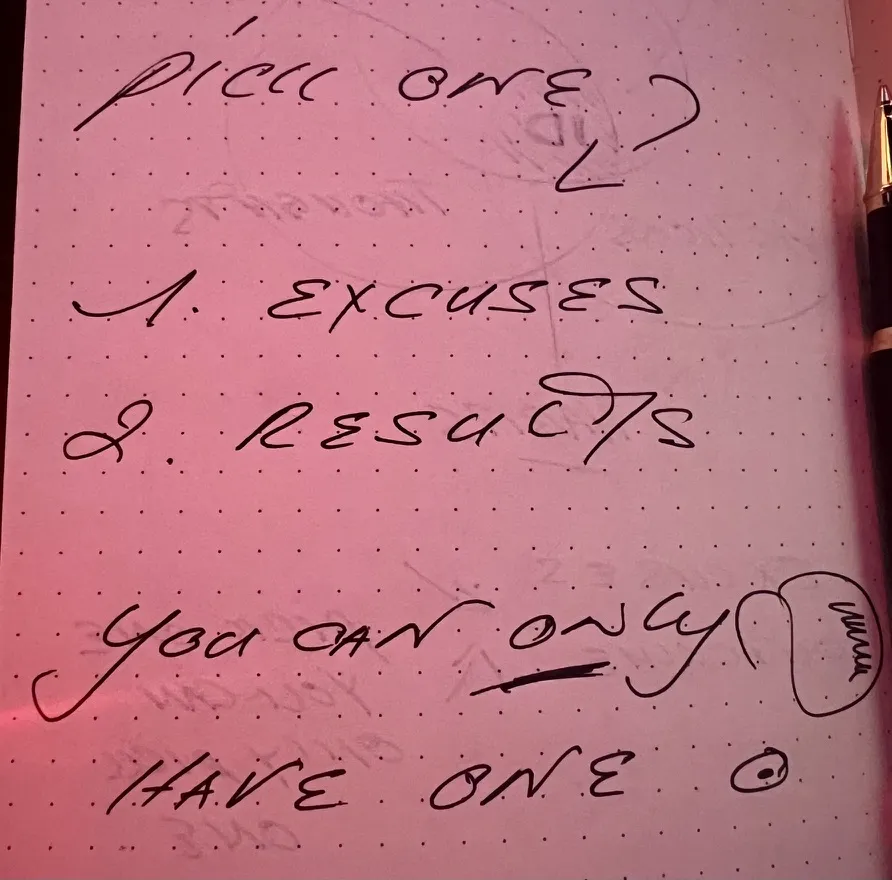
Marcus Aurelius wrote one line that has echoed through centuries: "The impediment to action advances action. What stands in the way becomes the way." This isn't positive thinking. This is physics.
Every obstacle contains information. It shows you what doesn't work. It reveals your weaknesses. It forces adaptation. It builds muscles you didn't know you needed. The obstacle isn't in the way. It is the way.
Thomas Edison failed 10,000 times before the lightbulb worked. He didn't see failures. He saw education. "I have not failed. I've just found 10,000 ways that won't work."
Every successful person I know has a story where the worst thing that happened became the best thing that happened. The business partner who betrayed them forced them to build something better. The market crash wiped out their first fortune and taught them risk management for their second. The health scare woke them up to what actually mattered. The obstacle was the way.

The Reframe
What if your current problem is exactly what you need? What if the setback contains the setup? What if the thing you're fighting is the thing you should be learning from?
This doesn't mean obstacles are fun. It means they're useful. Every time something blocks your path, you have a choice: Complain about the wall or find the door. Curse the obstacle or mine it for value. One response keeps you stuck. The other moves you forward.
The Teaching
Today, look at your biggest current obstacle. Don't think about how to remove it. Think about what it's teaching you.
What skill is it forcing you to develop? What weakness is it exposing? What opportunity is hidden inside it? The obstacle is pointing somewhere. Your job is to see where.
What obstacle am I facing that might actually be pointing me toward something better?
Master Your Responses
"Between stimulus and response there is a space. In that space is our power to choose our response. In our response lies our growth and our freedom."
"How much more grievous are the consequences of anger than the causes of it."
"A fool gives full vent to his spirit, but a wise man quietly holds it back."
The Problem
We react. Constantly. Someone cuts us off. We rage. Someone criticizes us. We defend. Someone disrespects us. We retaliate. Stimulus. Response. No gap. No thought. Just automatic reaction. And then we wonder why we're exhausted. Why relationships are strained. Why we keep having the same arguments over and over. We're not responding to life. We're being jerked around by it.
Color and Context
Seneca wrote an entire book about anger. Why? Because he recognized it as the most destructive force in human relationships. And the most common. He watched brilliant men destroy their careers over a perceived slight. Loving husbands ruin marriages over trivial disputes. Powerful emperors make catastrophic decisions from wounded pride. All because they couldn't master the space between stimulus and response.
Frankl, who learned to find that space while being tortured, put it simply: "Between stimulus and response there is a space. In that space is our power to choose." The space is everything.
When someone insults you, there's a microsecond before you react. In that microsecond, you can choose. React like an animal. Or respond like a man. Most of us don't even know the space exists. We've reacted automatically for so long, we've forgotten we have a choice. We do.
The Reframe
Mastering your responses isn't suppressing your emotions. It's creating options. Anger isn't the problem. Automatic anger is the problem. Sometimes anger is appropriate. Sometimes walking away is appropriate. Sometimes silence is appropriate. The goal isn't to feel nothing. It's to choose how you express what you feel. That's power.
When you react automatically, other people control you. When you respond deliberately, you control yourself.
The Teaching
Today, practice finding the space. When something irritates you, pause. One breath. Two breaths. Ask: How do I want to respond to this? Not how do I feel like responding. How do I want to respond.
The feeling will scream one answer. The pause lets you choose another. This won't be easy. Automatic reactions are habits. Breaking habits takes practice. But every time you find the space, you get stronger. And the space gets wider.
What situation regularly triggers an automatic reaction I later regret?
As A Man Thinketh
"A man is literally what he thinks, his character being the complete sum of all his thoughts."
"Finally, brothers, whatever is true, whatever is honorable, whatever is just, whatever is pure, whatever is lovely, whatever is commendable, if there is any excellence, if there is anything worthy of praise, think about these things."
"For as he thinks in his heart, so is he."
The Problem
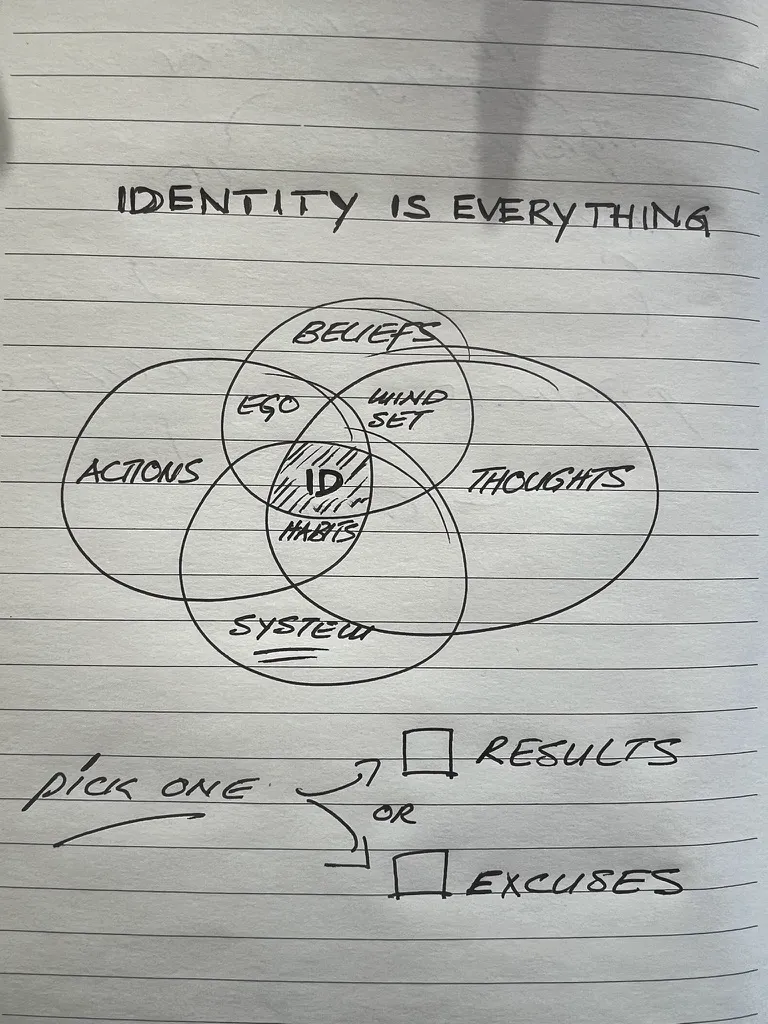
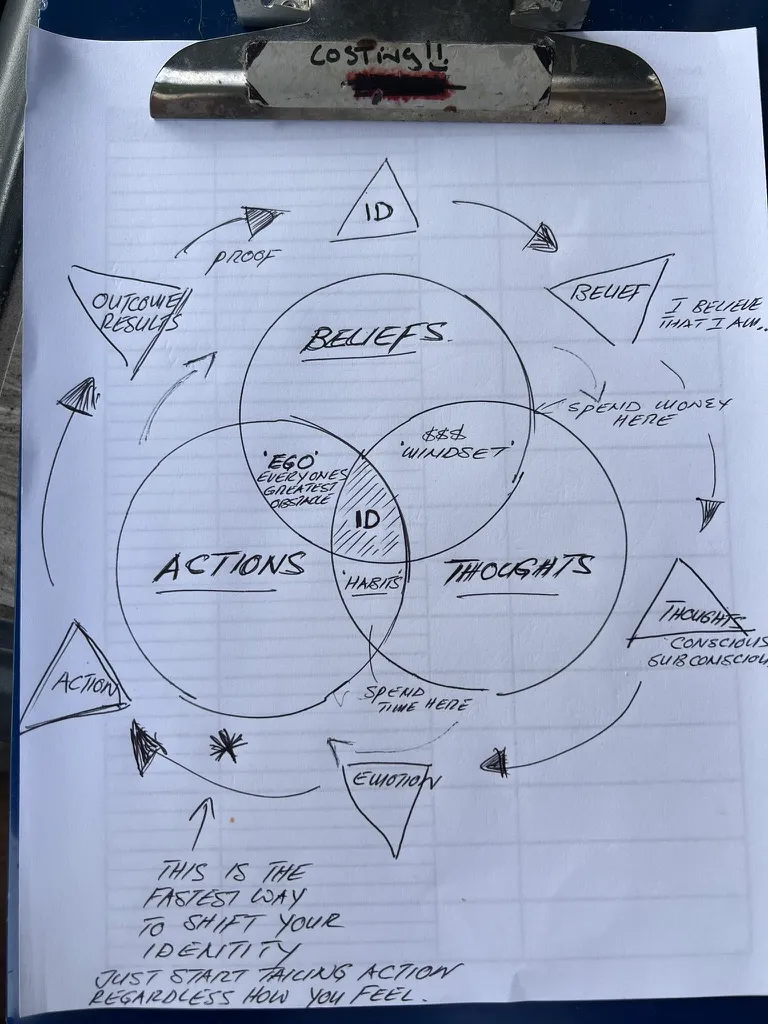
We underestimate the power of thought. We think our thoughts are private, inconsequential, just background noise. But James Allen saw it differently: "A man is literally what he thinks." Not figuratively. Literally. Every action begins as a thought. Every habit begins as a repeated thought. Every destiny begins as a pattern of thinking.
We curate our external lives obsessively. Our homes. Our clothes. Our social media. But our internal lives? Total chaos. Random thoughts running wild. Old narratives playing on repeat. Limiting beliefs operating unchallenged. We're building mansions on swamps.
Color and Context
Allen wrote "As a Man Thinketh" over a century ago. His insight: thoughts are seeds. Plant fear, harvest anxiety. Plant resentment, harvest bitterness. Plant possibility, harvest opportunity. The garden of your mind produces whatever you plant most consistently.
Marcus Aurelius understood this. "The soul becomes dyed with the color of its thoughts." Spend enough time thinking about problems, and you become a problem-focused person. Spend enough time thinking about possibilities, and you become a possibility-focused person. It's not positive thinking. It's honest agriculture. You get what you plant.
The Reframe
You're not stuck with your thoughts. Thoughts are suggestions, not commands. They arise. You can examine them. You can challenge them. You can replace them. "I can't do this" can become "I haven't done this yet." "It's always been this way" can become "What if it changed?" Reframing isn't lying to yourself. It's questioning whether the old frame was ever true.
The Philippians passage gives a filter: Is this thought true? Honorable? Just? Pure? Lovely? Commendable? If not, why are you entertaining it?
The Teaching
Today, observe your thoughts. Not to judge them. Just to notice them. What patterns emerge? What stories do you tell yourself? What loops keep repeating? Awareness is the first step. You can't change what you don't see.
Then ask: Is this thought serving me? Is it moving me toward who I want to become? If not, what thought would serve me better? You're the gardener. Start pulling weeds. Start planting seeds.

What thought pattern has been limiting me, and what could I think instead?
The Comparison Trap
"Comparison is the thief of joy."
"Pay careful attention to your own work, for then you will get the satisfaction of a job well done, and you won't need to compare yourself to anyone else."
"Envy is the ulcer of the soul."
The Problem
We compare constantly. His success. Her body. Their marriage. His car. Her promotion. Their vacation. We scroll through highlight reels and wonder why our behind-the-scenes footage looks so shabby. We measure our chapter three against someone else's chapter thirty. And we always come up short.
The comparison trap is insidious because it masquerades as motivation. "I just want to be successful like him." But it's not motivation. It's poison. It doesn't drive you forward. It makes you resent where you are.

Color and Context
Social media weaponized comparison. Now we can compare ourselves to millions of people simultaneously. Curated versions of lives. Filtered versions of faces. Edited versions of reality. And our brains, evolved for small tribes, can't tell the difference between a filtered photo and actual reality.
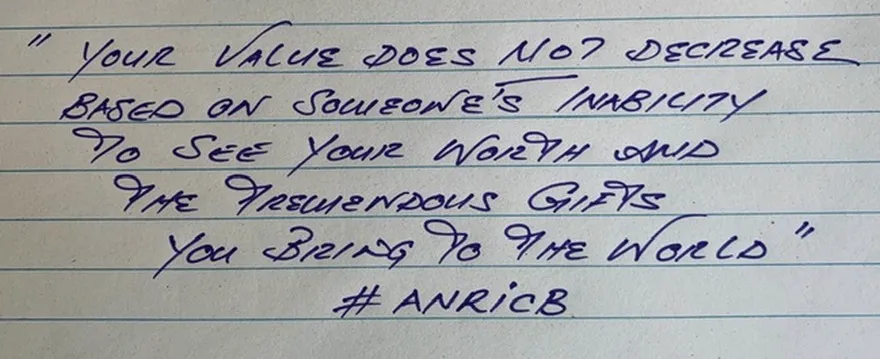
The Stoics knew: Envy is self-inflicted suffering. You're punishing yourself for someone else's success. You're making their achievement mean something negative about you. But their path has nothing to do with your path. Their timeline has nothing to do with your timeline. Their race isn't your race.
The Reframe
The only valid comparison is you versus you. Yesterday you versus today you. Who you were versus who you're becoming. That's a comparison that can actually motivate. That's a comparison that tracks real progress.
When you see someone else's success, you're seeing the tip of an iceberg. You're not seeing the failures. The setbacks. The sleepless nights. The sacrifices. You're comparing your whole truth to their partial truth. That's not a fair fight. Stop having it.
The Teaching
Today, notice every comparison. Every time you measure yourself against someone else, catch it. Don't judge it. Just notice it.
Then ask: Is this comparison serving me? Is it motivating me, or is it draining me? If the latter, redirect. Compare yourself to yesterday-you. Ask: Am I better than I was? Am I moving forward? That's the only scoreboard that matters.
Whose success have I been envying instead of running my own race?
Voluntary Discomfort
"Set aside a certain number of days, during which you shall be content with the scantiest fare and with rough dress, saying all the while: Is this the condition I feared?"
"No discipline seems pleasant at the time, but painful. Later on, however, it produces a harvest of righteousness and peace for those who have been trained by it."
"The more you sweat in training, the less you bleed in combat."
The Problem
We've optimized for comfort. Air conditioning. Memory foam. On-demand everything. We've eliminated friction from our lives so effectively that we've forgotten how to handle friction. When discomfort comes (and it will), we're soft. Unprepared. Shocked that life would dare inconvenience us.
Comfort is a drug. The more we get, the more we need. And the less we can function without it.

Color and Context
Seneca was one of the richest men in Rome. He could have lived in complete luxury every day of his life. Instead, he regularly practiced poverty. Cheap food. Rough clothing. No comforts. Not because he had to. Because he knew difficulty would eventually come, and he wanted to be ready.
"Is this the condition I feared?" he would ask himself while living simply. Usually, the answer was no. The fear was worse than the reality.
Musonius Rufus, Epictetus's teacher, said hardship is like a training camp for the soul. Athletes don't resent the gym. They understand that today's difficulty builds tomorrow's strength. Why should life be any different?
Stockdale spent seven years enduring torture. He survived because he'd trained himself mentally for difficulty. Not in a torture chamber, obviously. But through discipline. Through voluntary discomfort. Through building resilience before he needed it. By the time he needed it, it was already there.
The Reframe
Comfort is the enemy of growth. Not pleasure. Comfort. The insistence on ease. The avoidance of all difficulty. What if you voluntarily chose discomfort before life forced it on you? Cold showers. Fasting. Hard conversations. Physical challenges. Saying no to things you want. Not to punish yourself. To train yourself. Every voluntary discomfort is a deposit in the resilience account. When life makes a withdrawal, you'll have something there.
The Teaching
Today, choose one uncomfortable thing. Not dangerous. Not stupid. Just uncomfortable. Skip a meal. Take a cold shower. Have a conversation you've been avoiding. Work out harder than usual.
Notice what happens. Usually, the anticipation is worse than the experience. That's the lesson. We fear difficulty more than we need to. The only way to learn that is to walk into it voluntarily.
What voluntary discomfort could I practice to build resilience for involuntary difficulty?
Those Who Have A Why
"He who has a why to live for can bear almost any how."
"There is one quality which one must possess to win, and that is definiteness of purpose, the knowledge of what one wants, and a burning desire to possess it."
"Where there is no vision, the people perish."
The Problem
We've lost our why. Or maybe we never had one. We're busy. We're productive. We check the boxes. But if someone asked us why, really why, we'd struggle to answer. We're running on momentum. On obligation. On "this is what you do." But the fire has gone out because fires need fuel. And purpose is the fuel.
Color and Context
Frankl noticed something in the concentration camps: The prisoners who survived weren't necessarily the strongest or healthiest. They were the ones with a reason to live. A person to see again. A book to write. A mission to complete. The why gave them the how.
Nietzsche said it first, but Frankl proved it: "He who has a why to live for can bear almost any how." Purpose isn't a luxury. It's survival equipment.
Napoleon Hill studied successful people for twenty years. His conclusion: "There is one quality which one must possess to win, and that is definiteness of purpose, the knowledge of what one wants, and a burning desire to possess it." Not vague hopes. Not scattered interests. Definiteness. Clarity. A specific why.
Without it, we drift. We react to life instead of directing it. We let circumstances determine our course instead of choosing it ourselves.
The Reframe
Purpose isn't something you find. It's something you choose. Frankl didn't discover his purpose in the camps. He chose it. He decided that recording what he was learning about human psychology would be his reason to survive. He could have chosen anything. He chose that.
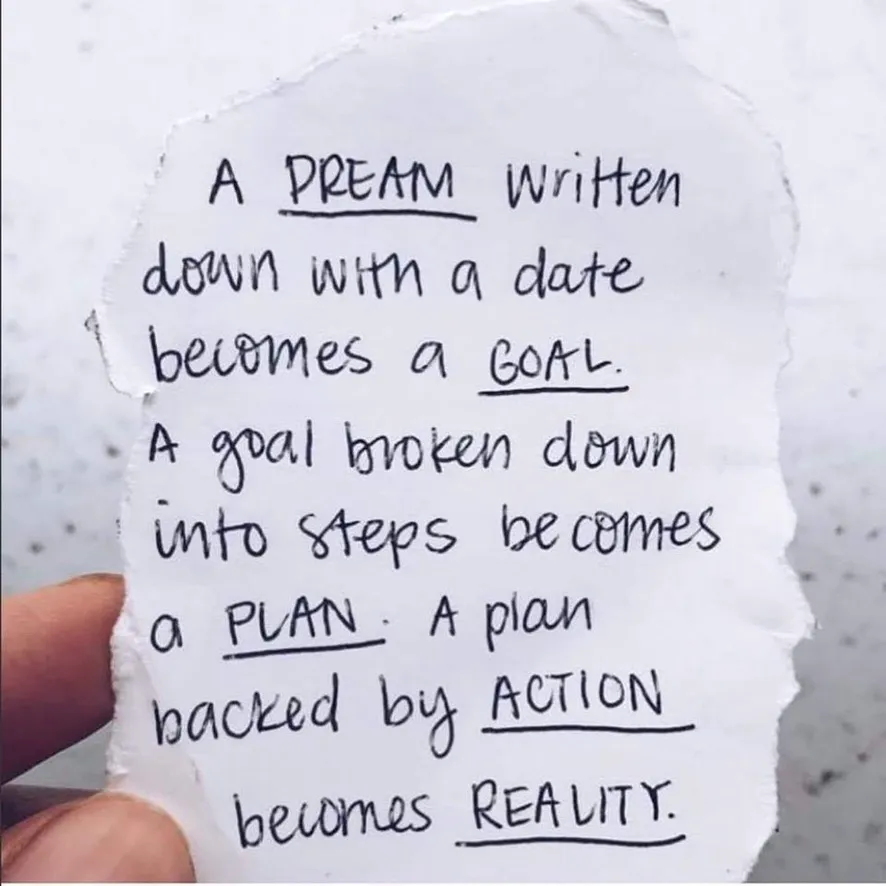
Purpose is a decision. You look at your life, your skills, your circumstances, and you decide: This matters. This is worth my energy. This is my why. It doesn't have to be world-changing. It has to be yours. Maybe it's the book you'll write. The business you'll build. The person you'll become. The legacy you'll leave. Whatever it is, name it. Claim it. Let it pull you forward.
The Teaching
Today, write down your why. Not your job description. Not your resume. Your reason for getting up tomorrow. Why does your life matter? What are you here to do? What would be left undone if you weren't here to do it?
If you don't know, that's okay. Start with what you suspect. The clarity comes from writing, not waiting. A vague why produces a vague life. A clear why produces direction, energy, and resilience.
Why does what I do matter, and to whom?
On The Shortness of Life
"It is not that we have a short space of time, but that we waste much of it."
"Dost thou love life? Then do not squander time, for that is the stuff life is made of."
"So teach us to number our days that we may get a heart of wisdom."
The Problem
We complain that life is short. It's not. Life is long enough for everything that matters. It just isn't long enough for everything that matters plus all the garbage we fill it with. The meetings that should be emails. The scrolling that adds nothing. The worrying about things we can't control. The arguments about things that don't matter. We have time. We just spend it like it's infinite. It's not.
Color and Context
Seneca wrote "On the Shortness of Life" almost 2,000 years ago. His diagnosis: We're not given a short life. We make it short. Through carelessness. Through distraction. Through assuming we have more time than we do.
"You are living as if destined to live forever. No thought of your frailty ever enters your head. You don't notice how much time has already passed, but squander it as though you had a full and overflowing supply." Sound familiar?
Benjamin Franklin tracked his time religiously. Every hour accounted for. Not because he was obsessive. Because he understood that time is the only truly non-renewable resource. You can lose money and make it back. You can lose health and sometimes recover it. You cannot lose time and get it back. Ever.
The Reframe
Time isn't something you have. It's something you are. Your life isn't measured in years. It's measured in attention. Where you put your attention is where you put your life.
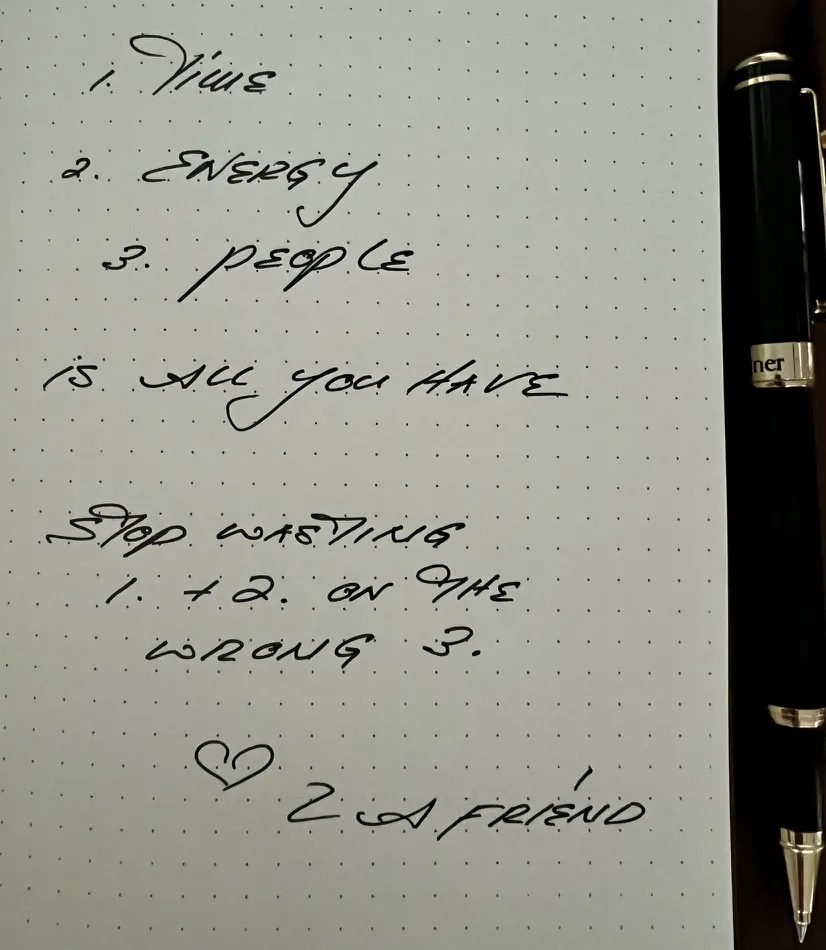
What if you treated time like money? Would you hand a hundred-dollar bill to every stranger who asked? Then why hand them an hour? Would you invest in things with zero return? Then why spend time on activities that produce nothing? Time is the currency of life. Spend it like it matters. Because it does.
The Teaching
Today, track your time. Not obsessively. Just notice. Where do the hours go? What are you actually spending your life on? No judgment. Just awareness.
Because you can't change what you don't see. And most of us have never really looked at how we spend our days. The results might be uncomfortable. Good. That discomfort is the beginning of change.
Where am I wasting time that I keep pretending I don't have?
The Stockdale Paradox
"You must never confuse faith that you will prevail in the end — which you can never afford to lose — with the discipline to confront the most brutal facts of your current reality."
"Hope deferred makes the heart sick, but a desire fulfilled is a tree of life."
"We are pressed on every side by troubles, but we are not crushed."
The Problem
We think optimism and realism are opposites. Either we're positive (and ignore the problems) or we're realistic (and lose hope). But that's a false choice. And it gets people killed.
In Stockdale's prison camp, the optimists died first. Not the pessimists. The optimists. Why? Because they kept expecting rescue by Christmas. Then Easter. Then the following Christmas. And each disappointment broke them a little more. False hope is more dangerous than no hope.
Color and Context
Jim Collins interviewed Admiral Stockdale for his book "Good to Great." Stockdale had been tortured for over seven years. Collins asked him who didn't make it out of the camps.
"The optimists," Stockdale said. "They were the ones who said, 'We're going to be out by Christmas.' And Christmas would come, and Christmas would go. Then they'd say, 'We're going to be out by Easter.' And Easter would come, and Easter would go. And then Thanksgiving, and then it would be Christmas again. And they died of a broken heart."
Then Stockdale explained what did work: "You must never confuse faith that you will prevail in the end with the discipline to confront the most brutal facts of your current reality." Both. At the same time. Yes, this is hard. Yes, it's a paradox. But it's also how humans survive impossible situations.
The Reframe
The Stockdale Paradox isn't about being half-optimistic and half-pessimistic. It's about being fully honest AND fully committed. Fully honest: Here's exactly where we are. No denial. No sugar-coating. These are the brutal facts. Fully committed: And we will prevail. Not by a certain date. Not in a specific way. But eventually, absolutely, we will prevail.
This is different from delusional positivity. And different from cynical realism. It's faith grounded in truth. Hope without illusion.
The Teaching
Today, apply the Stockdale Paradox to your situation. Step one: Confront the brutal facts. What's actually true? What are you pretending isn't a problem? What reality have you been avoiding?
Step two: Maintain faith. How will you prevail? Not when. Not how exactly. Just: Will you keep going until you figure it out? Both steps are essential. Brutal honesty without faith leads to despair. Faith without brutal honesty leads to delusion. You need both.
What brutal fact am I avoiding, and how can I face it while maintaining faith?
Turning Pro
"The amateur believes he must first overcome his fear, then he can do his work. The professional knows that fear can never be overcome."
"No one engaged in warfare entangles himself with the affairs of this life."
"Create a definite plan for carrying out your desire and begin at once, whether you are ready or not, to put this plan into action."
The Problem
We're waiting to feel ready. Ready to start the business. Ready to write the book. Ready to have the conversation. Ready to become the person we know we should be. We're waiting for confidence. For certainty. For the fear to go away. We'll be waiting forever. The fear never goes away. The doubt never fully leaves. The uncertainty is permanent. The question isn't whether you're ready. The question is whether you'll start anyway.
Color and Context
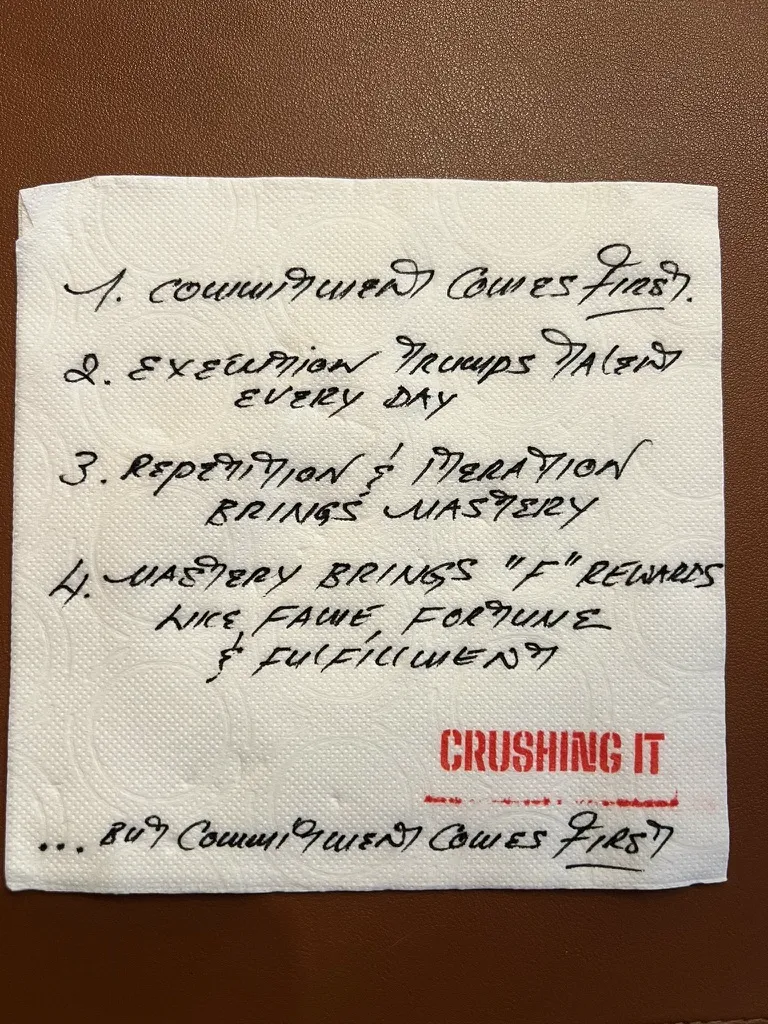
Pressfield draws a hard line between amateurs and professionals. The amateur waits for inspiration. The professional shows up on a schedule. The amateur lets fear stop him. The professional feels fear and works anyway. The amateur dabbles. The professional commits. The difference isn't talent. It's not luck. It's a decision.
Turning pro is a decision. You decide to show up every day whether you feel like it or not. You decide to do the work whether it's working or not. You decide to be a professional about the thing that matters to you. Nobody gives you permission. You take it.

The Reframe
Fear isn't the signal to stop. It's the signal that you're doing something important. The pro understands this. The amateur doesn't.
The amateur thinks, "I'll start when I'm not afraid anymore." The pro thinks, "I'm afraid. Time to get to work." What if you stopped waiting for the fear to leave and started working with the fear still there? What if the shaking hands and racing heart were just the admission price for doing meaningful work? What if "ready" was a myth, and "starting" was the only real answer?
The Teaching
Today, turn pro. Pick one thing that matters. Decide you're a professional at it now. Professionals show up. So show up. Professionals don't wait for permission. So stop waiting. Professionals do the work scared. So feel the fear and do it anyway.
This isn't about quitting your job or changing your life overnight. It's about changing your relationship to the work. Stop being an amateur. Turn pro.
What have I been treating as a hobby that deserves to be treated as a profession?
Encourage Their Dreams
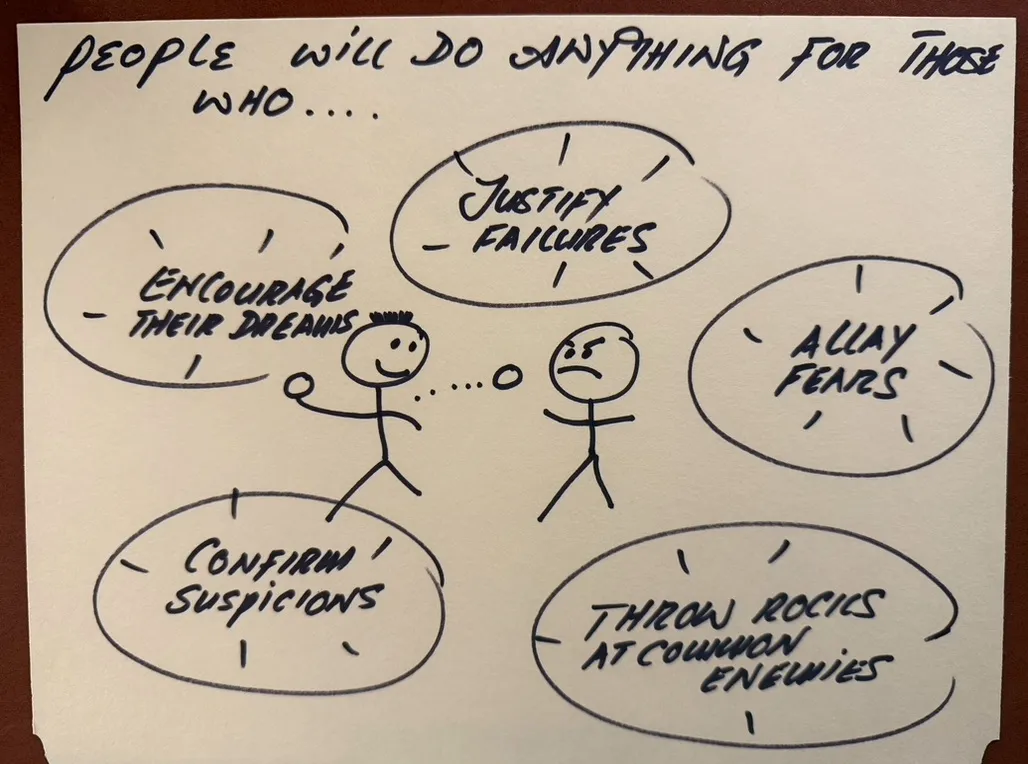
"People will do anything for those who encourage their dreams, justify their failures, allay their fears, confirm their suspicions, and help them throw rocks at their enemies."
"It is literally true that you can succeed best and quickest by helping others to succeed."
"Let each of you look not only to his own interests, but also to the interests of others."
The Problem
We're terrible listeners. We wait for our turn to talk. We prepare our counterargument. We think about how their story relates to our story. We're not really hearing them. We're just pausing between our own broadcasts. And then we wonder why people don't connect with us. Why we can't influence anyone. Why relationships feel shallow. It's because we've made everything about us.
Color and Context
Blair Warren spent years studying influence and persuasion. He boiled it down to one sentence: "People will do anything for those who encourage their dreams, justify their failures, allay their fears, confirm their suspicions, and help them throw rocks at their enemies." That's it. That's the secret.
Not manipulation. Just meeting people where they are. What are their dreams? Encourage them. What are their fears? Acknowledge them. What do they suspect is true? Confirm it. What enemies are they fighting? Stand beside them.
This isn't about being fake. It's about being genuinely interested in someone else's world instead of just broadcasting your own. Napoleon Hill found the same thing: The fastest path to success is helping others succeed. When you become genuinely useful to others, everything changes.
The Reframe
Influence isn't about being impressive. It's about being interested. The most charismatic people aren't the ones with the best stories. They're the ones who make others feel heard.
What if you spent less energy on being interesting and more on being interested? What if every conversation was an opportunity to understand rather than impress? What if your attention was the gift you gave, instead of trying to capture everyone else's?
The Teaching
Today, practice deep listening. In your next conversation, focus entirely on them. Their dreams. Their fears. Their struggles. Don't think about what you'll say next. Don't relate it to your experience. Just listen.
Ask questions. Real ones. Not leading ones. "What does that mean to you?" "How did that feel?" "What happened next?" Watch what happens when someone feels genuinely heard. It's more powerful than any technique.
Whose dreams have I been failing to encourage?
Evening Reflection
"I will keep constant watch over myself and — most usefully — will put each day up for review."
"What bad habit did I curb today? What virtue did I practice? In what ways am I better?"
"Search me, O God, and know my heart! Try me and know my thoughts!"
The Problem
We don't reflect. We just do. Day after day. Week after week. Without ever stopping to ask: What worked? What didn't? What am I learning? Where am I growing? Where am I sliding backward? Without reflection, every day is groundhog day. Same mistakes. Same patterns. Same results.
Color and Context
Every night, before bed, Seneca examined his day. "What bad habit did I curb today? What virtue did I practice? In what ways am I better?" Not to punish himself. To learn. To improve. To make tomorrow better than today.
This wasn't self-flagellation. It was self-improvement. A daily audit. A course correction. A commitment to being 1% better, compounded over a lifetime.
Epictetus taught his students the same: Don't let the day pass unexamined. "Where did I go wrong? What did I do right? What duty did I leave unfulfilled?" Simple questions. Profound impact.

The Reframe
Reflection isn't about guilt. It's about growth. You're not judging your day. You're learning from it. Every day is data. Every interaction is information. Every failure is feedback. But only if you pay attention. Only if you examine. Only if you reflect.
The Stoics understood: An unexamined day is a wasted day. Not because nothing happened. Because nothing was learned.
The Teaching
Tonight, before bed, ask yourself three questions:
1. What went well today? (What can I do more of?)
2. What didn't go well? (What can I learn from this?)
3. What will I do differently tomorrow?
Five minutes. Every night. Write it down. Over 21 days, patterns will emerge. Insights will compound. Growth will accelerate. The evening reflection is the simplest, most powerful habit you can build.
What is one thing I did today that I want to do more of tomorrow?
Scars As Credentials
"The wound is the place where the Light enters you."
"We are afflicted in every way, but not crushed; perplexed, but not driven to despair; persecuted, but not forsaken; struck down, but not destroyed."
"A gem cannot be polished without friction, nor a man perfected without trials."
The Problem
We hide our wounds. We cover our scars. We pretend we have it all together. We think vulnerability is weakness. We think people want to see the polished version. So we perform. We curate. We present a highlight reel and hope nobody looks behind the curtain.
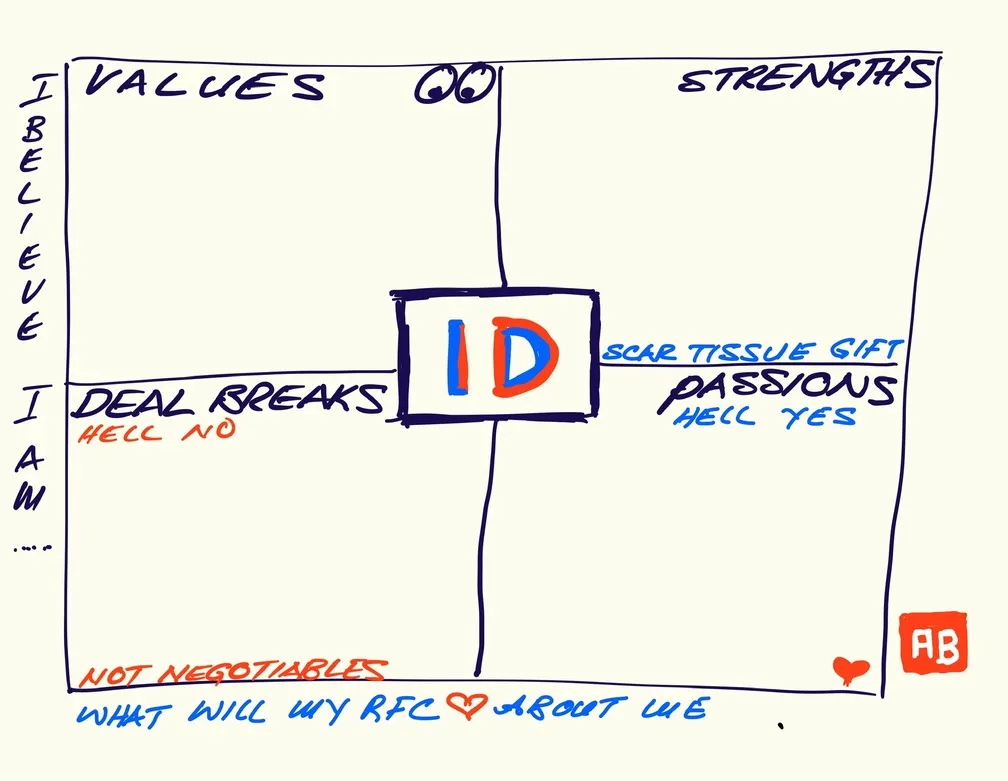
But here's what we miss: The scars are the credentials. The wounds are the qualifications. The failures are the education. We're hiding our best material.
Color and Context
Every leader worth following has scars. Every teacher worth learning from has failed. Every guide worth trusting has been lost themselves. The wounds aren't disqualifications. They're prerequisites.
Think about who you trust. Is it the person with the perfect story? Or the person who's been through something? We trust people who've suffered because we know they understand. We follow people who've failed because we know they've learned. The scars prove you've been in the arena.
Frankl didn't write about meaning despite the camps. He wrote about meaning because of them. The authority came from the suffering. You don't need to broadcast your wounds. But don't hide them either. They're part of your story. And they might be the most useful part.
The Reframe
What if your greatest wound became your greatest offering? What if the thing you're most ashamed of became the thing that helps others most? What if your failure was your qualification?
The Japanese art of Kintsugi repairs broken pottery with gold, making the breaks visible and beautiful. The cracks become the art. Your scars can work the same way. They're not flaws to fix. They're features to honor.
The Teaching
Today, reframe one of your scars. Pick something you've considered a failure or weakness. Ask: What did this teach me that success couldn't have? What credibility does this give me that I couldn't have earned any other way? What conversation can I now have that I couldn't have before?
Your scars are assets. Start treating them that way.
What wound have I been hiding that could actually help someone else?
Still Got Fight
"Those who succeed in an outstanding way seldom do so before the age of 40. More often, they do not strike their real pace until they are well beyond the age of 50."
"I have fought the good fight, I have finished the race, I have kept the faith."
"Let every man or woman here remember this, that if you wish to be great at all, you must begin where you are and with what you are."
The Problem
We think we're past our prime. The culture tells us to step aside. Make room for the young. Accept that our best days are behind us. And some mornings, we believe it. Some mornings, the fire does feel like wet dog. The energy isn't what it used to be. The cynicism has crept in around the edges. But here's the thing: We're not dead yet.
Color and Context
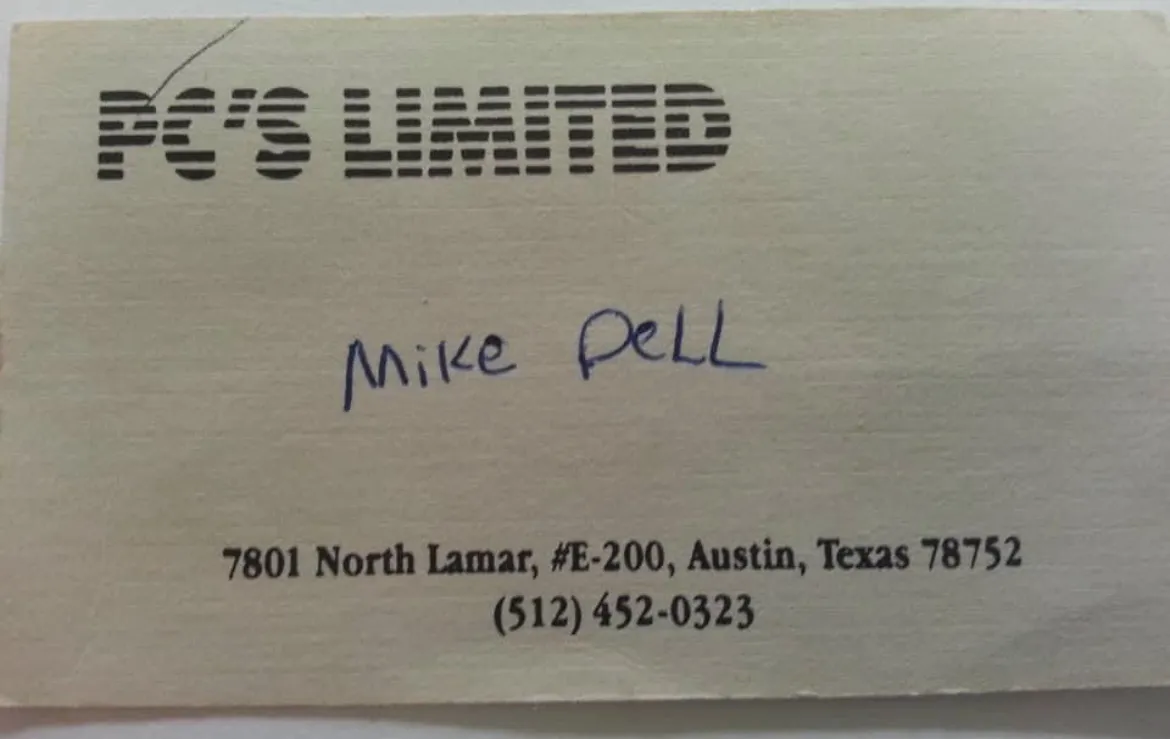
Napoleon Hill spent 20 years studying success. His conclusion: Most extraordinary achievement happens after 40. Often after 50.
Colonel Sanders started KFC at 65 after a thousand rejections. Ray Kroc was 52 when he built McDonald's. Charles Darwin published Origin of Species at 50. Henry Ford was 45 when the Model T changed the world.
These weren't young men with limitless energy. They were men who'd already been beaten down, disappointed, and counted out. They just didn't quit.
Conwell told audiences for decades: "Begin where you are and with what you are." Not where you wish you were. Not what you wish you had. Here. Now. This. The starting line isn't somewhere else. It's under your feet.
The Reframe
The fire isn't out. It's buried. Buried under obligations. Under other people's expectations. Under years of playing it safe. But it's still there.
You've proven it by getting through these 21 days. You've proven it by showing up when you could have scrolled. You've proven it by asking questions you've been avoiding. The man who has no fight left doesn't pick up a book called "The Shi(f)t That Matters." The man who's given up doesn't spend 21 mornings confronting himself. You did. The fire isn't out.
The Teaching
This isn't the end. This is the beginning. 21 days of framework. Now comes the application.
The two circles. The last freedom. Memento mori. Amor fati. The inner citadel. The unlived life. The acres of diamonds. Focus. The obstacle. Response mastery. Thought as seed. Comparison vs. growth. Voluntary discomfort. Purpose. Time. The Stockdale Paradox. Turning pro. Influence. Reflection. Scars as credentials.
You have the tools. Now use them. Not perfectly. Not all at once. Just... use them. One day at a time. One decision at a time. You've still got fight. Prove it.
What will I do differently starting tomorrow to honor what I've learned?
Join 🔥IGNIS CITADEL⭕️
You've spent 21 days doing this work alone. You don't have to keep doing it alone.
Every week, I host a session inside The Capital Cafe at 🔥IGNIS CITADEL⭕️. Men like us. Gathering around these ideas. Challenging each other. Holding each other accountable.
No gurus. No hand-holding. Just conversation among men who still have fight left and aren't willing to waste what's left.
Bourbon encouraged. Bullshit discouraged.
If you want in, you know where to find me.
The fire isn't out.
Let's keep it burning.
↑ Back to Table of ContentsSources and Further Reading
The Stoics
- Marcus Aurelius — Meditations (Gregory Hays translation)
- Seneca — Letters from a Stoic, On the Shortness of Life
- Epictetus — The Enchiridion, Discourses
Modern Stoic Application
- Admiral James Stockdale — Courage Under Fire
- Ryan Holiday — The Obstacle Is The Way, The Daily Stoic
Meaning and Suffering
- Viktor Frankl — Man's Search for Meaning
New Thought and Self-Mastery
- Napoleon Hill — Think and Grow Rich
- James Allen — As a Man Thinketh
- Russell Conwell — Acres of Diamonds
War and Resistance
- Steven Pressfield — The War of Art, Turning Pro
Persuasion and Influence
- Blair Warren — The One Sentence Persuasion Course
Biblical Sources
- Ecclesiastes, Job, Proverbs, Paul's Letters, Psalms
Join 🔥IGNIS CITADEL⭕️
[What's Next content will be inserted in Phase 3]
Sources and Further Reading
[Sources content will be inserted in Phase 3]